
Can International Students reclaim their bond if their lease is terminated due to COVID-19?
After the Covid-19 pandemic hit, Australia declared the closing of their borders to contain the spread of the pandemic, leaving thousands of International students stranded and unable to return for their studies. Many of these students have agreed upon leases for their accommodation during their education term but were unable to return and carry out the lease. International students often suffer the disadvantages of language difficulties and are unfamiliar with the local laws to enforce their rights and obligations under the law.

A client, D, who is an international student in Tasmania who faced a problem regarding rental bonds. She had a verbal agreement with a sub-lessor to sublease a room prior to COVID-19, and prepaid her bond with the intention to sign the sub-lease once she was back in the country after her holidays. Once Australia declared the lockdown, she was unable to return to carry out the lease and had to cancel it. The Sub-lessor decided to keep the rental bond paid, citing damages for loss of rent and advertising costs. As the bond was not paid into the MyBonds System, she was unable to utilise official channels to reclaim the bond and was advised to negotiate with the lessor instead.
Rental bonds are usually paid to cover reasonable damages and cleaning costs caused by a tenant. Using this principle, we wrote a letter of demand to the sub-lessor to refund the rental bond, as the losses and damages suffered were not due to our client, but rather the unfortunate situation of COVID-19.
The Australian Government often stressed both landlords and tenants have suffered losses due to the pandemic, and there is no reason not to negotiate and compromise. Through our negotiations, we were able to help our client reclaim the rental bond, while offering the sub-lessor one week’s rent to mitigate their losses, leading to a mutually beneficial situation. In this situation, the client had the bravery to speak out and sought our help to correct her injustice, and was rewarded with a positive result.
Regardless of how small your matter might be, our lawyers are always ready and willing to protect and uphold your rights. Should you have any queries, do not hesitate to contact us at 02 9267 4988, or info@sunlaws.com and Vincent.hui@sunlaws.com.
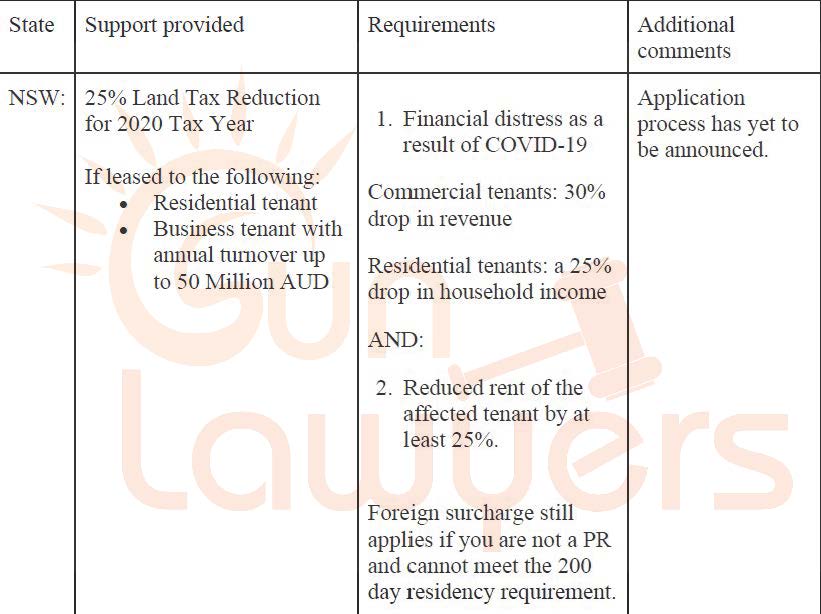
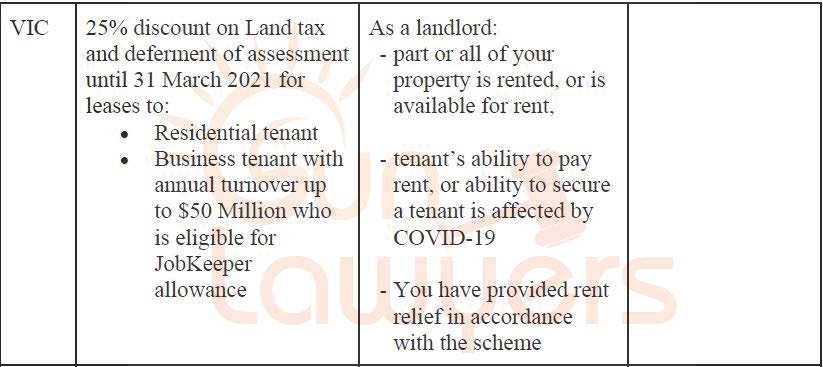
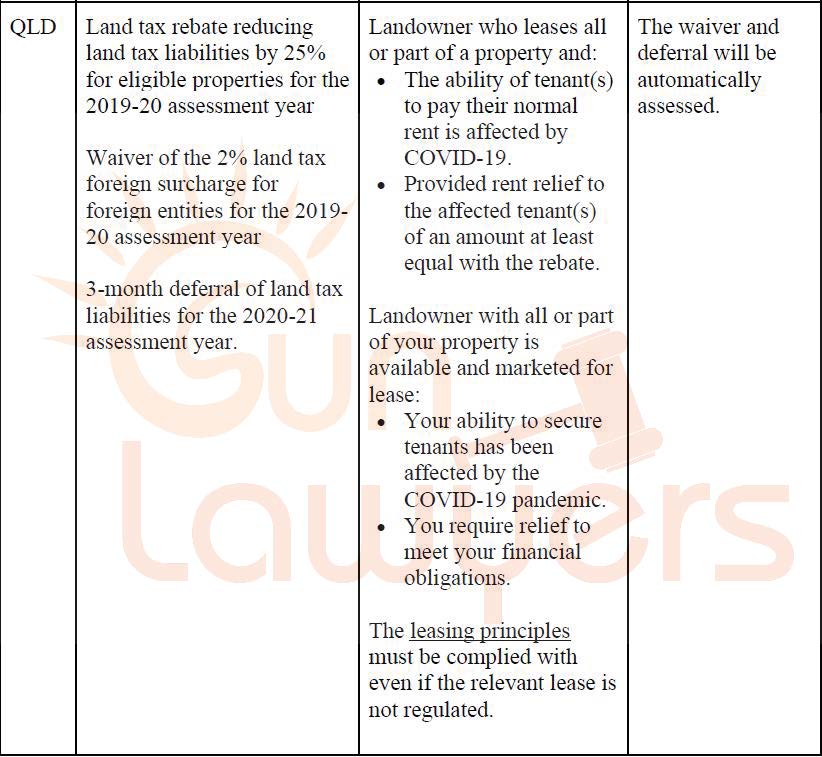
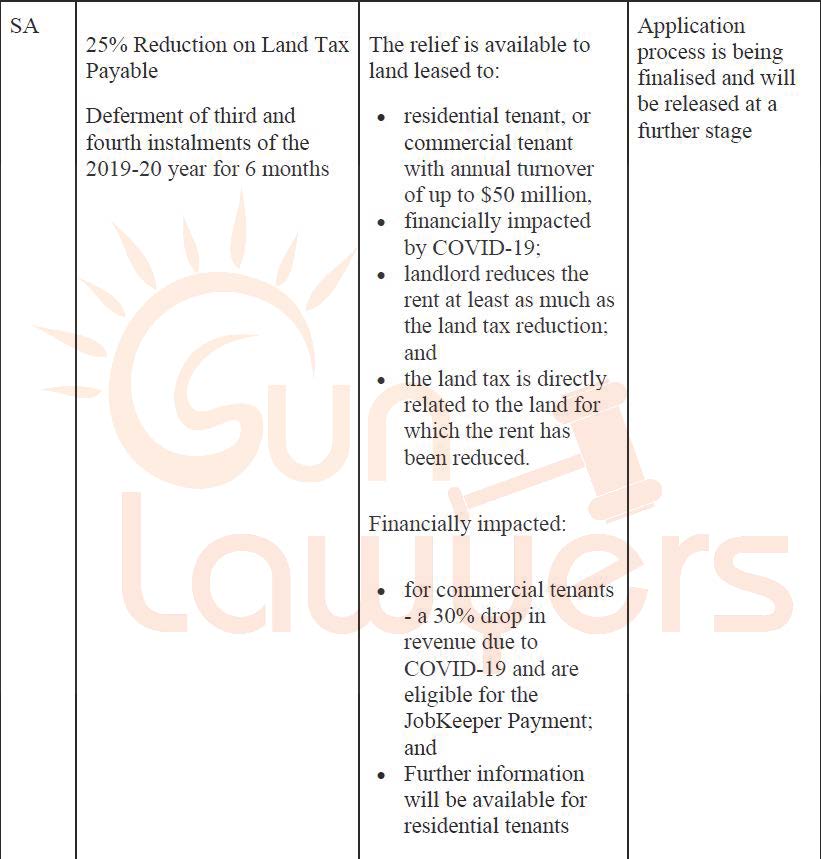
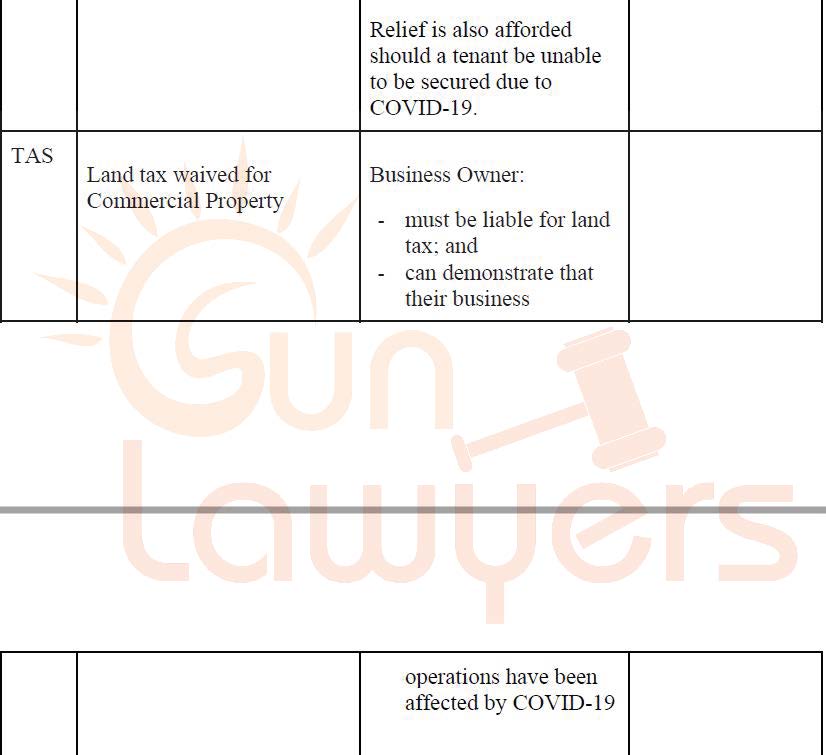
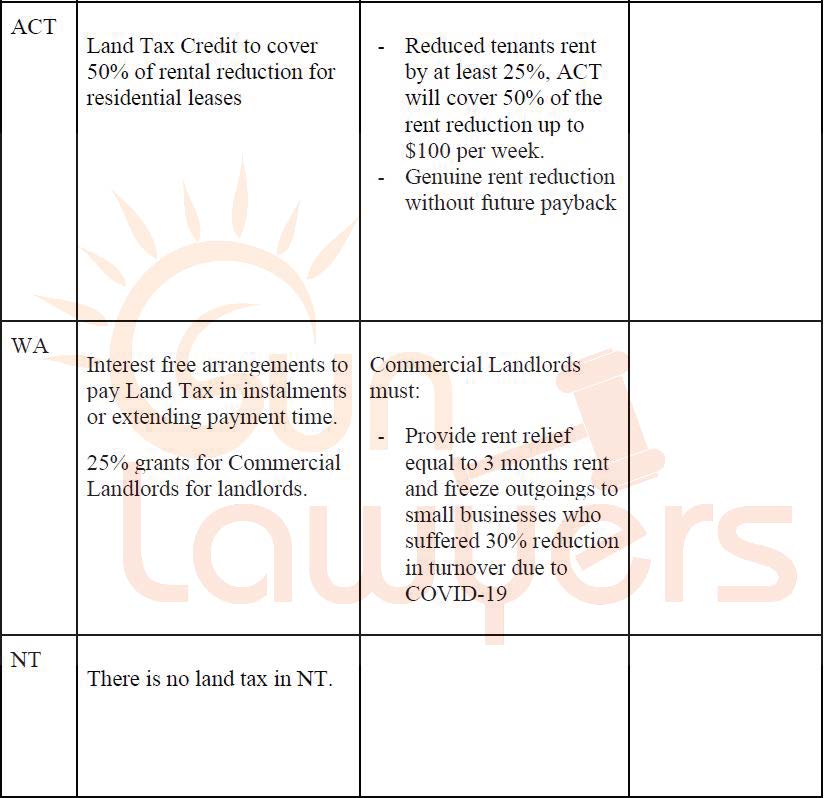
A Quick Guide To COVID-19 Land Tax Support in Australia
As part of Australia’s response to COVID-19, many businesses and activities had to be shut down, causing widespread economic impacts. To help support the Australian rental market, many states have introduced Land Tax measures to assist both landlords and tenants.
The following guide to Land Tax relief in Australia will help landlords understand their entitlements at a glance as of 4 May 2020.
Should you require any help in any residential or commercial leases, or require more information, do not hesitate to contact us at info@sunlaws.com and Vincent.hui@sunlaws.com, or (02)9267 4988.
NSW COVID-19 RESIDENTIAL TENANCY AMENDMENTS
The global COVID-19 pandemic has caused huge economic impacts on many Australians, and many are facing trouble meeting their financial obligations. In response, the Federal government has previously announced a moratorium on evictions to provide temporary protections for tenants. Last week, the NSW Government introduced amendments in form of the Residential Tenancies Amendments (COVID-19) Regulation 2020 (the Amendments) that aims to help residential tenants who are a member of a household affected by the COVID-19 Pandemic.
The amendments include:
- 6 months moratorium period on evictions due to rental arrears;
- 60-day stop on terminations;
- 90-day notice period requirement on other terminations; and
- Prohibition of black-listing tenants.
Ban on termination
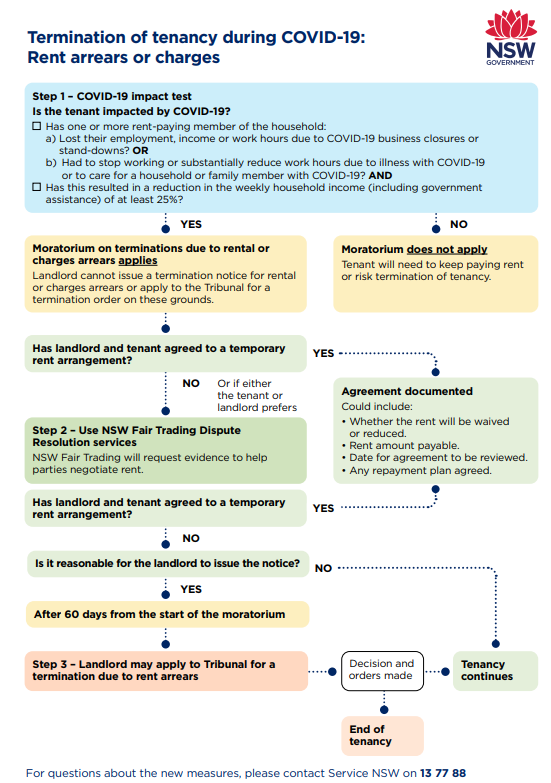
The moratorium puts a 6-month ban on evictions, including a 60-days stop from its commencement day on new termination notices and terminations due to rent arrears, provided the tenants is a member of a household financially affected by COVID-19.
COVID-19 Income Test
The Amendments provide that a household is impacted if one or more rent-paying members has suffered the following as a result COVID-19:
- Lost employment or income; or
- Reduction in work hours or income; or
- Had to stop working or materially reduced hours due to COVID-19, or carer responsibilities for another member with COVID-19.
As a result, the weekly household income has been reduced by at least 25% as calculated by the total weekly income after tax including government payments of each rent-paying member.
Tenants are to provide documentary proof showing:
- Job termination or loss of work hours
- Government income support, or
- Prior income after tax.
If you are unable to prove that you have been financially affected, you will not be eligible to the moratorium and you may still be terminated for rental arrears.
Termination rights
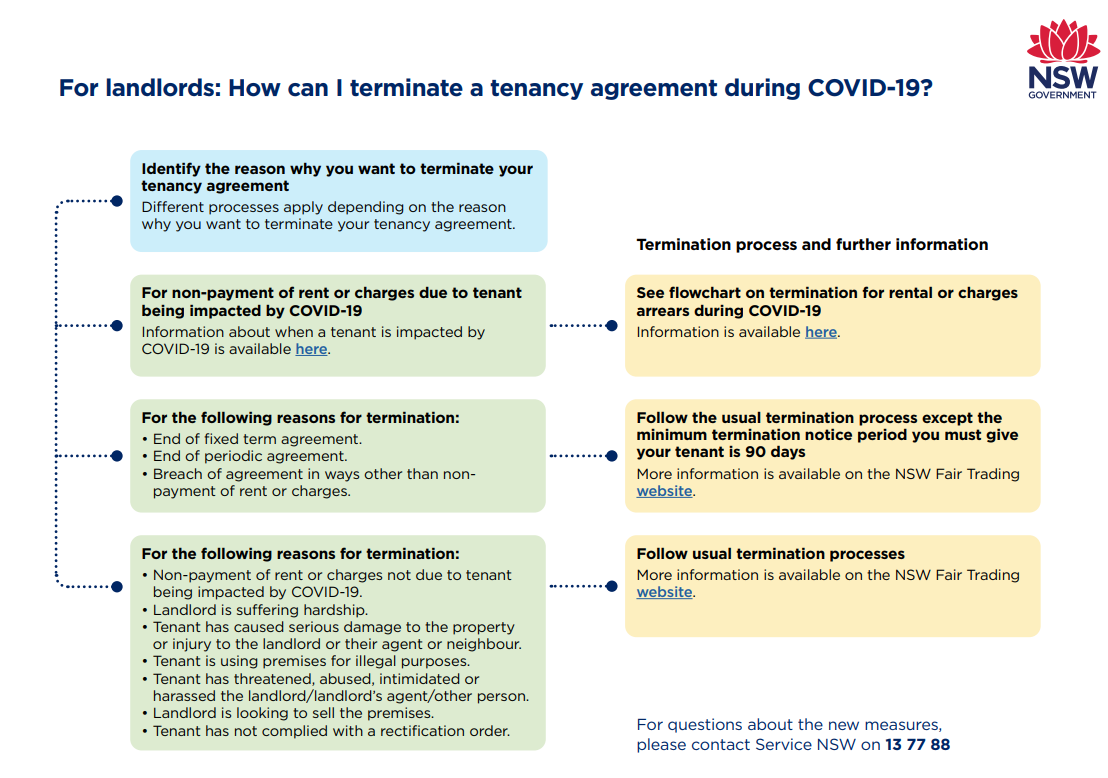
Landlords may still terminate within the moratorium period if three conditions are fulfilled:
- The termination notice or application is made at least 60 days after the commencement of the Amendments,
- The landlord has participated in formal negotiations in good faith with the tenant, and
- it is fair and reasonable in the circumstances to terminate.
In dealing with an application by a landlord or impacted tenant regarding termination, the Tribunal may have regard to:
- any advice by NSW Fair Trading relating to the rent negotiations process;
- whether the tenant continued to make payments;
- nature of financial hardship and general financial position;
- availability and affordability of reasonable alternative accommodation for the impacted tenant;
- any special vulnerability of the tenant; and
- public health objectives of citizens remaining at home and preventing avoidable movement.
The NSW Government has provided two flowcharts as a good summary for tenancy rights under the Amendments.
Important considerations
The Federal and NSW government has emphasized on the importance in having honest communications and negotiations in good faith between landlords and tenants. Both parties should keep an open line of communication and try to reach a mutually beneficial outcome to help each other in these difficult times.
During negotiations, there are some important considerations such as:
- the amount of rent reduction
- the time period of rent reduction
- whether current rental arrears are waived or delayed
- future rent amount after the period of rent reduction
- by market review or the previous rental amount
- the financial situation of both parties
- any concessions the Landlord may be entitled to (etc. land tax reduction)
- any continuing obligation to provide proof of financial hardship
It is important to review the considerations above to protect your interests, and any concluded agreements must be put in writing for legal certainty. It is also recommended that you obtain legal advice before signing any rental agreements.
Our Professional Services
At Sun Lawyers, we provide professional services to help both tenants and landlords with any tenancy matters. Our property team are experienced in drafting and reviewing legal documents to protect your best interests in any agreements. We will attend to any negotiations, mediations or dispute resolution between tenants and landlords. If any dispute cannot be resolved, we can also help you bring the matter to court.
Should you require more information, do not hesitate to contact us at 9267 4988 or email info@sunlaws.com and Vincent.hui@sunlaws.com to get in touch with us.

 中文
中文